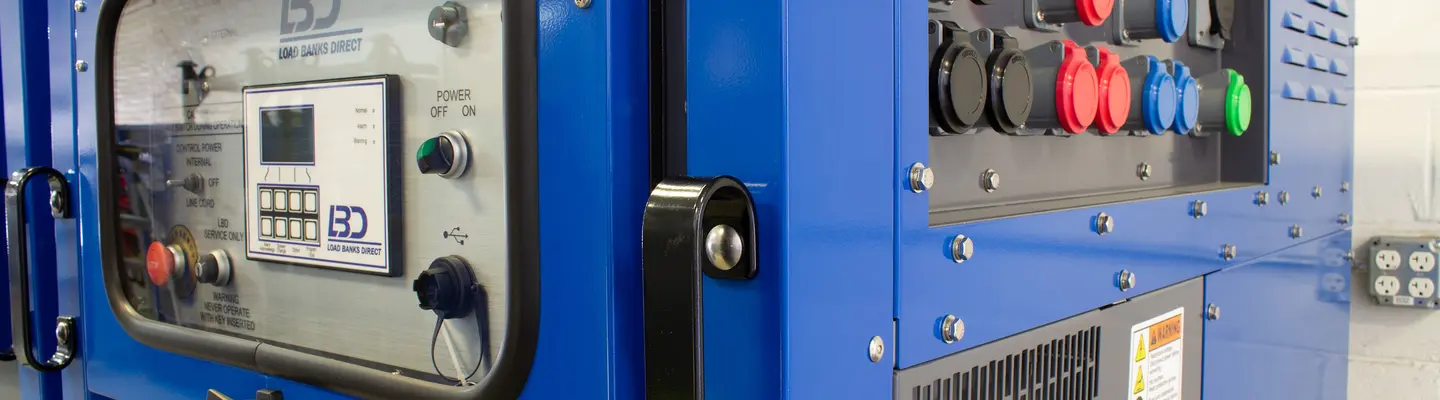
Load bank testing reveals hidden maintenance issues and helps ensure your generator will perform at capacity during an emergency.
When your primary power source goes down, your backup generators are the lifelines that keep essential operations running. But unless you test them regularly, there’s no guarantee they will perform when it matters most. Generator load bank tests help ensure the generators will start when you need them and produce the kilowatts of power you expect for the duration required.
For facilities such as hospitals, data centers, industrial plants and utilities, generator load bank testing is critical—and often, required by NFPA 110 or other regulations. Testing frequency depends on factors such as the generator’s age and condition, the manufacturer’s guidelines, the setting and industry standards.
What is a generator load bank test?
A generator load bank test is like a stress test for your backup power. During the test, a load bank applies a controlled electrical load to simulate real-world demand. Applying this load reveals how the generator and other components of a backup power system perform.
During testing, technicians monitor factors such as power output, voltage stability, frequency response, operating temperature, fuel system performance, exhaust temperature and emissions. The results confirm whether the generator can carry and sustain its rated load.
Testing can reveal maintenance issues that need to be addressed, such as wet stacking. Wet stacking happens when unburned fuel, oil and carbon build up in the exhaust system. It’s a common problem with generators that rarely run at full load, and it can cause the generator to underperform or fail. Running the generator at full capacity during a load test can burn off this residue.
The main types of generator load bank tests
Different types of load banks serve specific purposes in evaluating generator performance. The three main types are resistive, reactive and resistive/reactive.
Resistive load test: Testing for full kW performance
This test uses a resistive load bank to convert the electrical energy produced by a generator into heat. It tests the system at 100% of its rated kW capacity. It checks the engine output and alternator efficiency and verifies the performance of critical subsystems such as cooling, fuel and exhaust. It does not fully validate the kVA rating.
Reactive load test: Testing for reactive power handling
Reactive load banks mimic conditions created by electrical equipment such as motor-driven equipment, capacitors, transformers and computer servers. They convert electrical energy into a magnetic field and are used to test how the generator handles reactive power (inductive and capacitive loads) as well as active power. Reactive power is measured in kilovolt-amperes reactive, or kVAR.
A reactive load test helps evaluate how the system manages the voltage and current phase relationship and verifies voltage regulator performance. It doesn’t measure a generator’s full apparent power (active plus reactive power, measured in kVA). Instead, it applies a lagging power factor, typically at 0.8, that challenges the alternator’s voltage regulation and stability.
Resistive/reactive test: The most comprehensive
Resistive and reactive load bank testing provides the most comprehensive assessment of a generator’s real-world performance, testing both resistive and reactive loads at specific power factors. The goal is to confirm that the generator can handle both types of loads, including combined loads.
The test uses a resistive/reactive load bank and is especially crucial for mission-critical facilities such as hospitals and data centers, where multiple generators are often run in parallel configurations.
How to load test a generator
Testing procedures vary by generator model and site requirements. A typical generator load testing process includes the following steps. Consult the generator’s operating manual for specific instructions.
1. Pre-test inspection
- Check fuel, oil and coolant levels.
- Inspect belts, hoses and wiring.
- Verify that exhaust and ventilation systems are clear.
2. Set up the load bank
- Review the manufacturer’s instructions and safety procedures.
- Connect the load bank to the generator, following those procedures.
- Ensure proper grounding and secure all connections.
3. Start the generator
Bring the generator up to normal operating temperature, voltage and frequency.
4. Apply the load
- Add load in controlled increments.
- Monitor key metrics such as frequency, voltage, temperature and pressure.
- Maintain each load step for a set duration, commonly 30 minutes to 1 hour.
5. Record data and observe performance
- Document readings at each stage.
- Watch for issues such as voltage drop, frequency drift, excessive smoke and overheating.
6. Gradually remove the load and cool down
- Gradually reduce the load in stages before shutting down the generator.
- Review performance data and inspect for leaks, debris and other signs of stress.
What to do if the generator fails the load test
Identify and repair the issue if the generator fails to maintain voltage, frequency or temperature within specifications or shows other signs of distress. Common problems include:
- Fuel contamination or flow restriction
- Clogged filters or cooling system blockages
- Faulty sensors, governors or voltage regulators
- Worn engine components or inadequate maintenance
After taking corrective action, run another load test to confirm the issue has been resolved.
The value of partnering with an experienced load bank provider
When renting a load bank for generator load testing, it pays to choose a vendor with the experience and technical expertise to help you configure and conduct an effective test that complies with industry standards.
The load bank team at United Rentals can help you accurately assess your testing requirements, define key test parameters and configure the optimal load bank setup for the application. With a broad fleet of resistive and resistive/reactive load banks available in sizes from 100 kW to 3,000 kW, United Rentals is ready to support your test with equipment, knowledge and service.
 Facebook
 X
 Linkedin
 Email
 Print
 Copy Link
 RSS Feed