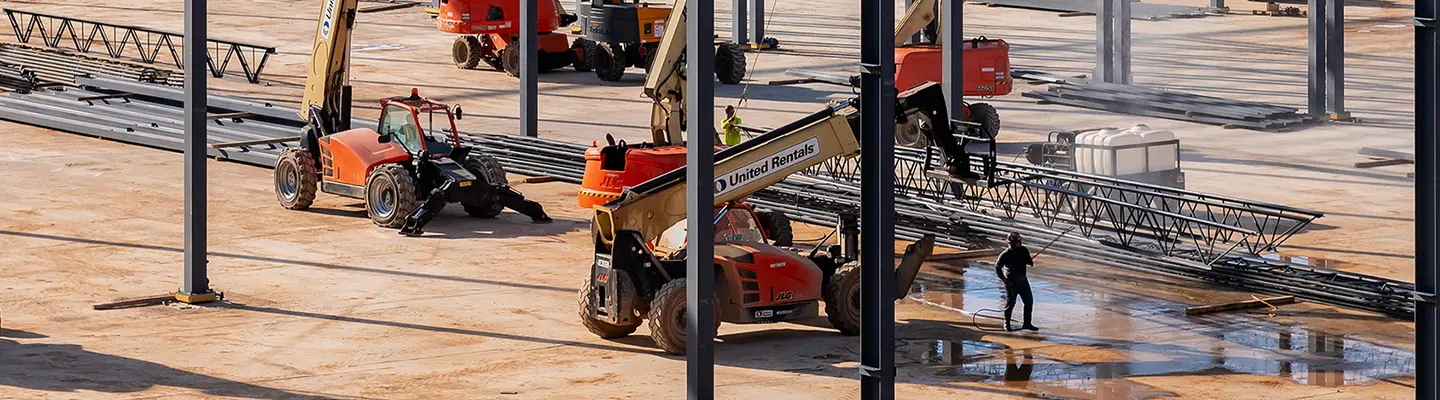
Buying used construction equipment can be a smart way to add a machine to your fleet without paying new-equipment prices, spending capital, tying up credit or waiting for new inventory to become available. If you choose carefully, you can get a well-maintained used forklift, scissor lift, skid steer or other machine that’s ready for work while avoiding the steepest part of a new machine’s depreciation curve.
The key is knowing what you’re buying and purchasing from a reliable source. Before you buy, evaluate who is selling the machine, how it was used and maintained and what condition it’s in.
1. Define your equipment need
Before comparing listings, define the work you need the machine to do. Consider factors such as the capacity, reach or lift height your projects require, the attachments you want to use, your preferred power source, the environment the machine will operate in and which models your operators are familiar with.
Don’t settle for a machine just because the price is right. It may not be a good buy if it’s under- or oversized, can’t accommodate the desired attachments, is poorly suited to your typical jobsite environment or requires a lot of additional operator training.
2. Buy from a seller who knows the machine
Where to buy used construction equipment is one of the most important decisions in the process. Auctions, private sellers, independent dealers and rental equipment providers can all offer used machines. One big difference is how much the seller knows about the machine.
Ask these questions before you buy:
- Where did the machine come from?
- What kind of work did it do?
- Who maintained it?
- What records are available?
- What service or repairs were completed before it was listed for sale?
A seller that can’t explain the equipment’s history or provide records leaves you to make assumptions about the machine that could lead to unexpected repair costs or downtime.
3. Review the records
The records and the machine should tell the same story. A history of good maintenance should be reflected in the condition of the equipment.
Look to see what preventive maintenance was performed and how regularly. For engine-powered equipment, look for documentation of oil, fluid and filter changes, along with other manufacturer-recommended service. For hydraulic equipment, review any work done on hoses, cylinders, pumps, valves and other hydraulic components.
A recent repair is not automatically a reason to walk away. Replacing worn components is standard. Ask what failed, why it failed and what repair was made. If a relatively new machine required a major repair, ask additional questions about the failure, the operating conditions and whether the underlying cause was addressed.
4. Put age and hours in context
Age and operating hours matter, but neither tells you enough by itself. A newer machine could have significant wear if it was used heavily and operated in challenging conditions. An older machine could have plenty of productive life left if it was used in a less demanding application and well maintained.
Compare the hour meter with what is typical for that type of equipment. Then consider age, hours, maintenance records, inspection results and work history together.
RELATED: What Is Considered High Hours on a Forklift?
5. Inspect and test the machine
During the inspection, look for rust, cracks, repair welds, fluid leaks, worn hydraulic hoses and uneven tire or track wear. Check engine fluid levels and condition, and review the air filter condition and oil filter service date. For some machines, an oil analysis can help identify internal wear or contamination before you commit.
For a high-value or specialized machine, have a qualified mechanic or service technician perform the inspection. They may spot issues that aren’t apparent during a walk-around.
If possible, test the machine by starting and stopping it, then operating all controls and functions. Listen for unusual noises and pay attention to abnormal exhaust, warning lights, leaks or performance issues.
Used Construction Equipment Buying Tips | ||
|---|---|---|
Equipment Type | Match to Your Needs | What to Inspect |
Used forklift |
|
|
Used skid steer |
|
|
Used scissor lift |
|
|
Used boom lift |
|
|
Used mini excavator |
|
|
Why buy used construction equipment from United Rentals?
Buying from a reputable rental equipment provider can give you more visibility into how a machine was maintained and access to support after the sale. United Rentals combines a large inventory of used equipment with maintenance history, financing options and ongoing service capabilities.
A broad selection of jobsite-tested machines
As the owner of North America’s largest fleet of construction equipment, United Rentals offers jobsite-tested used equipment from leading manufacturers across a range of equipment types, models, sizes and power options.
The equipment is typically old enough to have depreciated in value, which limits future depreciation, but young enough to have productive life left.
Meticulously maintained equipment
United Rentals equipment is regularly inspected, serviced and maintained by professionally trained in-house technicians during its rental life. Before it’s offered for sale, it’s inspected and prepared so it’s ready to work.
Financing, leasing and service coverage
Flexible financing and leasing options are available, including rent-to-own and lease-to-own arrangements in applicable cases. United Rentals also offers United Guard protection on eligible equipment and components to help protect your investment.
End-to-end support
United Rentals is available to provide support after you purchase a used machine, which may include:
- Preventive maintenance
- On-demand onsite and in-shop service and repairs
- Equipment inspections
- Managed maintenance programs
- Jobsite services and service scheduling
- Fleet management support
- Operator training through United Academy
Because United Rentals has ongoing relationships with parts suppliers, it can source parts you may need, sometimes as soon as the next day.
Making purchase decisions that best support your business
The best used machine isn’t necessarily the one with the lowest price tag. It’s the one that will help you add capacity or take on new types of projects without generating avoidable repair costs or downtime. A unit that fits your needs and delivers reliable performance is a strategic investment in your business.
Buying from a seller that can explain the machine’s history, stand behind its condition and provide support after the sale can give you greater confidence in that investment.
 Facebook
 X
 Linkedin
 Email
 Print
 Copy Link
 RSS Feed