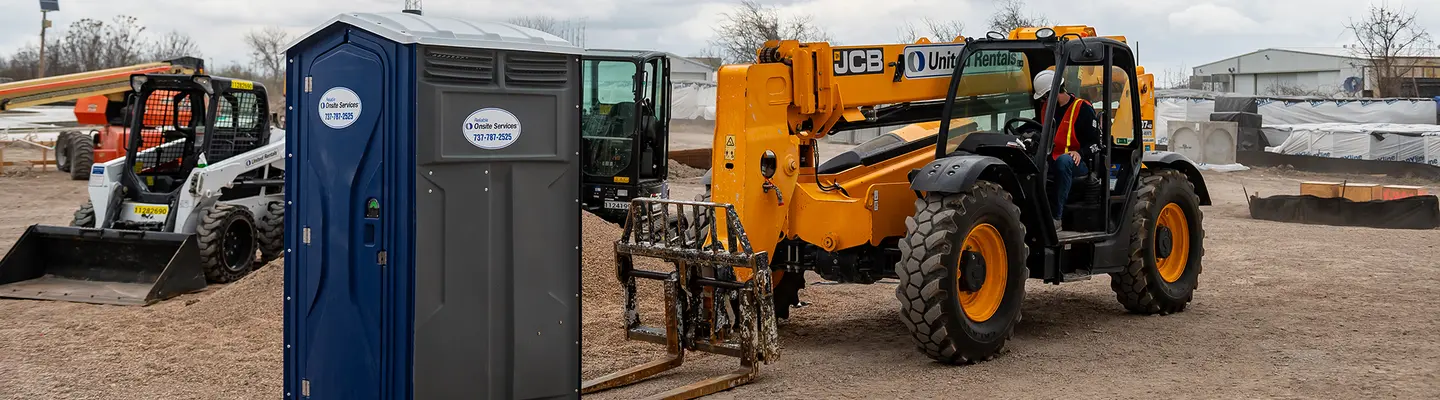
Strategically planning for portable toilets optimizes jobsite productivity and worker well-being.
For project managers, renting portable restrooms for a construction site is just one task on a long project mobilization to-do list, and it may seem like a simple one. But careful planning for these temporary sanitary facilities can pay off by increasing productivity and worker well-being, not to mention staying compliant with OSHA portable toilet requirements.
By following this portable toilet guide, contractors can determine the number of stalls they need, make an informed choice between porta potties and restroom trailers, optimize the placement of portable toilets, and ensure adequate service, which is as important as the restrooms themselves.
When workers have access to clean, conveniently located construction bathrooms, they’re likely to remain on the jobsite during shifts, take shorter bathroom breaks, and have positive feelings about the jobsite conditions—and the job itself.
Types of portable toilets
The options for renting portable restrooms for construction sites come down to porta potties and restroom trailers. Learn more about both choices below.
Standard and enhanced porta potties
The standard single porta potty for a construction site includes a toilet with seat and a self-closing door and latch. Some units offer both a toilet and a urinal. For hand washing, portable hand wash stations and hand sanitizing stations or self-contained multi-sink pods can be placed outside porta potties.
Enhanced porta potties include a sink, and some feature a flush toilet. An ADA-compliant porta potty is wider and lower to the ground for wheelchair accessibility and has grab bars.
Porta potties are easy to transport, set up and remove. Porta potties that can be hoisted by crane and narrower, elevator-fit porta potties with casters are available for high-rise and multi-story construction projects.
Restroom trailers
For larger jobsites, towable restroom trailers offer a more upscale experience and accommodate more people, reducing wait time.
These trailers can provide anywhere from two stations to 19 stations and are available in ADA-accessible units. They feature interior lights, upgraded flooring, flush toilets and sinks. Larger restroom trailers may include climate control and running hot and cold sink water. Heated and insulated restroom trailers are ideal for freezing weather conditions.
Restroom trailers can be connected to a plumbing system if the site has water and sewage lines. This eliminates the chance that odors will develop and makes the restrooms easier to clean. If the site has no utilities, waste is sent to an exterior holding tank. A generator can power the trailer if electricity isn’t available.
Porta potty vs. restroom trailer
While construction porta potties are sufficient for many jobsites, restroom trailers offer advantages on some projects.
- On projects with large crews, they reduce wait times and improve sanitation.
- They provide a more comfortable and durable solution for projects that last months or years.
- In extreme hot or cold weather, climate-controlled trailers provide better comfort and usability.
- For high-visibility projects visited by clients or executives, restroom trailers provide a higher-end experience.
Of course, contractors don’t have to choose between restroom trailers and porta potties. When renting a restroom trailer for a large jobsite, they may want to add a few porta potties to more remote areas.
Determining the optimal number of portable toilets
The number of portable toilets required on a construction site depends mainly on the number of workers. OSHA portable toilet requirements stipulate:
- 1 toilet for every 20 workers on a site with fewer than 200 workers
- 1 toilet seat and 1 urinal per 40 workers on sites with 200 or more employees
- 1 toilet seat and 1 urinal per 50 workers on sites with 500 or more employees
If crews have access to nearby permanent restroom facilities, the site may need fewer portable toilets.
Providing more than the required number of portable toilets is worth considering in order to prevent lines, which slow down work.
RELATED: Check out our Portable Restroom Calculator.
Guidelines for portable toilet placement
The optimal placement of a restroom trailer or a porta potty can increase safety and efficiency and minimize workflow disruptions. Project managers should consider these tips.
- Seek flat, dry ground. Place facilities on flat, stable ground at least 10 to 15 feet away from high-traffic areas such as roads, walkways or driveways. Avoid locating units in areas that collect standing water or otherwise become muddy. Consider installing ground protection mats under them to level and stabilize the ground.
- Plan for truck access. Choose a location that is easy for delivery and service trucks to access. Installing ground protection mats as access roads creates smooth passage for trucks and a safer, cleaner jobsite.
- Stay near utilities. Place restroom trailers near water and sewer lines if the site has them.
- Keep toilets close to the work. OSHA guidelines recommend locating portable toilets within a 10-minute walk of work areas. Locating them within 200 feet decreases the duration of restroom breaks.
- Downwind is best. Position units downwind from gathering areas such as break zones and office trailers for optimal ventilation and odor control.
- Look for shade in summer. In hot climates, units should be placed in shaded areas when possible to improve comfort and odor control.
- Prepare for high winds. In high-wind locations, positioning porta potties near windbreaks or securely anchoring them helps prevent tipping.
Cleaning and maintenance frequency
On a busy construction site, restrooms can get dirty quickly. Workers may leave the site to access offsite facilities if the onsite facilities aren’t clean, don’t smell fresh, or are out of toilet paper.
An adequate cleaning and maintenance schedule is essential, so it’s important to ask potential portable toilet vendors about the level of service they offer. A full-service vendor will remove waste, disinfect surfaces and replenish supplies such as toilet paper and hand sanitizer as often as needed.
The ideal frequency of servicing depends on factors such as the number of workers using the restroom, the ambient temperature and the type of restroom. Generally speaking, portable restrooms need cleaning at least once per week, and sometimes two or three times per week.
In hot weather, more frequent service may be needed due to higher usage and odor buildup. In freezing weather conditions, the vendor may need to add antifreeze to holding tanks.
Choosing a portable toilet vendor
An experienced, reliable rental equipment vendor with a large inventory and a strong service team can help contractors plan for portable toilets and ensure that restroom facilities are adequate, convenient, clean and well stocked. Some vendors offer prompt emergency servicing to address urgent sanitation concerns.
As the leading equipment rental company in the U.S., United Rentals goes the extra mile to deliver the portable toilets and customizable services contractors need. Services include:
- Assessment of site layout and workforce needs to recommend the ideal number and types of units.
- Strategic placement of units to balance accessibility, convenience and site safety.
- Regularly scheduled restocking and cleaning using top-quality sanitation products.
- Rapid response in emergencies such as damages, overflows and unit relocations.
- Knowledge of most recent OSHA and local sanitation regulations to ensure compliance so contractors avoid fines.
Partnering with the same vendor for portable toilets, ground protection mats and rental equipment streamlines procurement and drives administrative efficiencies. Collaborating with United Rentals at the start of project planning can also unlock opportunities to innovate the jobsite and facilitate even greater productivity gains.
 Facebook
 X
 Linkedin
 Email
 Print
 Copy Link
 RSS Feed