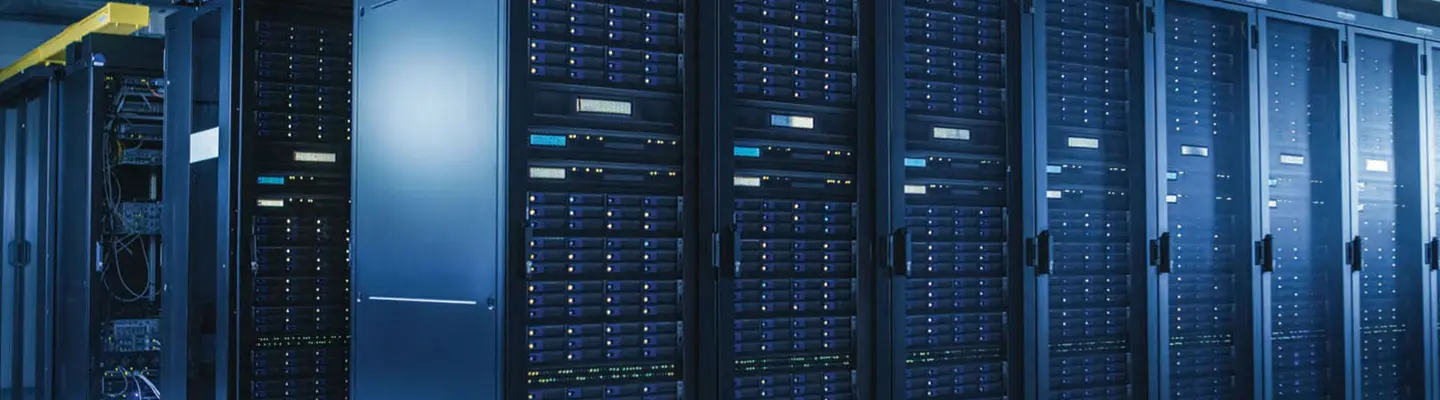
Global demand for data centers has surged, yet the power grid's capacity and its ability to interconnect new loads have not kept pace. After data center construction is complete, owners typically wait several years for full grid interconnection. As more data centers are built, and on expedited timelines, delays will only increase. Bridge power systems are becoming crucial investments that allow data center owners to power the facility during commissioning and begin operations sooner, reducing time-to-revenue.
Benefits of bridge power systems
In addition to bridging the gap between construction and utility power, bridging power solutions offer other advantages, including:
- Flexible site selection: Data center developers gain the freedom to build in optimal locations rather than being tied to locations with available grid capacity.
- Increased sustainability: Hybrid solutions and microgrids that incorporate batteries and solar panels or alternatively fueled generators reduce carbon emissions, helping data center operators meet sustainability targets.
- Long-term backup power: Bridge power solutions such as microgrids can be repurposed as backup power once the facility is fully connected to the grid, adding capacity and resilience.
Steps to designing an effective bridge power system
Designing a temporary data center power solution is a complex undertaking. Below is a quick look at some of the key steps involved.
Partnering with a temporary power solutions provider that brings deep knowledge and years of experience in the data center industry helps ensure a successful outcome. United Rentals can engineer, install and service a custom bridge power system or guide customers to the optimal equipment for their bridge power needs.
Identify the permits required
Work with relevant authorities to understand applicable federal, state, and local regulations and seek the required permits. United Rentals can help customers navigate the permitting process.
Assess the power requirements
Perform a detailed load analysis for IT equipment, cooling systems, lighting, mechanical systems and all other power loads. Factor in future growth projections. A bridge power solution should be modular and scalable to meet evolving power needs. Add a safety margin on top to ensure sufficient, uninterrupted power.
Plan for redundancy and reliability
Redundancy requires careful planning. Work with a knowledgeable bridge power partner to identify optimal redundancy strategies such as N-1, N+1 and 2N.
Pay special attention to ramp loads and power profiles to maximize efficiencies and minimize fuel costs. Adherence to transients, capacitive and other power profile features is the key to reliability and continuous output.
Look to diesel generators and cleaner power options
Tier 4 Final diesel generators are the traditional go-to solutions for bridge power. United Rentals offers towable generators ranging from 120 kW to 2,000 kW and the ability to parallel generators as loads grow or complexity increases.
Natural gas and propane generators are a more sustainable alternative with lower service costs. Unlike diesel generators, they aren’t susceptible to wet stacking.
In areas where hydrogen fuel is readily available, hydrogen-powered fuel cells are another option to consider for clean, reliable primary or backup power. Though hydrogen is expensive, hydrogen-powered fuel cells are more efficient than fossil fuel generators. That’s because hydrogen creates more energy per pound of fuel than gas or diesel. Like diesel generators, these modular units can be linked together to meet large power demands.
Integrate battery energy storage systems
Battery energy storage systems (BESS) improve the resilience of power generation systems, reduce fuel costs and increase sustainability.
When paired with a generator, a BESS optimizes generator runtime, dramatically reducing fuel consumption and carbon emissions. An automated load management system turns the generator on and off as needed and powers the load with the battery whenever possible.
Plan for efficient power distribution
Safe, effective power distribution is key to ensuring reliable and flexible delivery of temporary power across all areas of the data center. United Rentals offers a full inventory of electrical distribution equipment and can help customers tailor a distribution system that integrates seamlessly with generators and BESS and supports cost savings and sustainability.
Careful planning of distribution infrastructure also sets the foundation for a smooth transition to permanent utility power, avoiding costly downtime or rework.
Designing an optimal power distribution system entails:
- Sizing power distribution panels for the projected load, factoring in future load increases.
- Using step-up or step-down transformers to match voltage requirements between generators, batteries and electrical infrastructure to optimize efficiency and protect sensitive equipment.
- Arranging flexible cabling, transfer switches and power boxes to allow easy rerouting and safe connections throughout the site.
Implement remote monitoring
Remotely monitoring generators helps maintain power system reliability and reduce equipment-related downtime. It’s essential when powering mission-critical loads.
Telematics-equipped generators and Total Control®, United Rentals’ cloud-based worksite management platform, enable remote monitoring of engine performance and low-fuel alerts.
In today’s fast-paced, hypercompetitive data center environment, reliable, scalable bridge power systems are vital strategic assets that help data center owners mitigate utility interconnection delays and begin serving customers, and generating revenue, sooner.
Turn to United Rentals as a trusted partner for rapidly deployable off-grid power solutions tailored to the application and budget, complete with end-to-end support.
 Facebook
 X
 Linkedin
 Email
 Print
 Copy Link
 RSS Feed